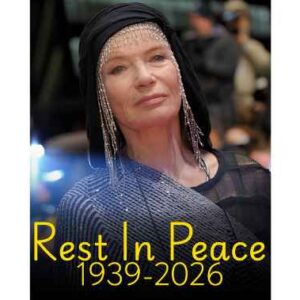
Long before supermodels became international celebrities, one extraordinary woman was already transforming the relationship between fashion, photography, cinema, and art.
Veruschka, the legendary German supermodel born Vera von Lehndorff, passed away at her home in Berlin on November 24, 2026, at the age of 87. She was surrounded by family and friends. Her death was announced through the website of her sister Catharina Kappelhoff-Wulff’s fashion brand.
No specific cause of death has been publicly disclosed.
Celebrated as one of the world’s original supermodels, Veruschka helped redefine beauty during the 1960s. Yet behind the glamorous magazine covers and unforgettable photographs was a woman whose childhood had been devastated by war, personal tragedy, and the loss of her father.
A Childhood Shattered by World War II
Vera Gottliebe Anna Gräfin von Lehndorff-Steinort was born on May 14, 1939, in Königsberg, East Prussia, now known as Kaliningrad, Russia.
She belonged to a prominent German aristocratic family and spent part of her early childhood at the family’s Steinort estate. However, the privileges associated with her ancestry could not protect her from the devastating consequences of World War II.
Her father, Count Heinrich von Lehndorff-Steinort, became involved in the German resistance against Adolf Hitler. Following the unsuccessful July 20, 1944, assassination plot, he was arrested and executed by the Nazi regime.
Vera was only five years old when she lost her father.
Her mother was imprisoned, while Vera and her two older sisters were separated from her and detained under the Nazi policy of collective family punishment.
Vera von Lehndorff as a child with her father, before his death in 1944
The family’s suffering did not end immediately after the war. Displacement, financial hardship, and the challenges of rebuilding their lives became part of Vera’s formative years.
In a 2017 interview with DUST Magazine, she recalled learning more about her father’s fate after being publicly humiliated by a schoolteacher. Her mother eventually explained that her father had resisted the Nazi dictatorship.
The experience left Vera with memories that remained with her throughout her life. Her later career would offer her an opportunity to establish an identity entirely her own, independent of her family’s aristocratic past.
(Source: DUST Magazine)
From an Unknown Art Student to an International Fashion Icon
As a young woman, Vera developed an interest in painting and studied art in Hamburg before continuing her education in Florence, Italy.
In 1959, at approximately 20 years old, she encountered Italian photographer Ugo Mulas, who encouraged her to work in front of the camera.
However, her early modeling career was far from an immediate success. Standing more than six feet tall, Vera possessed physical characteristics that did not always correspond with the industry’s conventional expectations.
Her initial attempts to establish herself in New York proved disappointing.
Rather than abandon her ambitions, she reinvented herself.
She adopted the name Veruschka, a Russian diminutive of Vera, and developed a distinctive public persona characterized by mystery, confidence, and theatrical expression.
When she returned to New York in 1964, the fashion industry was entering a period of extraordinary cultural change. Her unconventional appearance, once considered a disadvantage, became one of her greatest professional strengths.
Young Veruschka photographed by Helmut Newton for Vogue, October 1965
Image link:
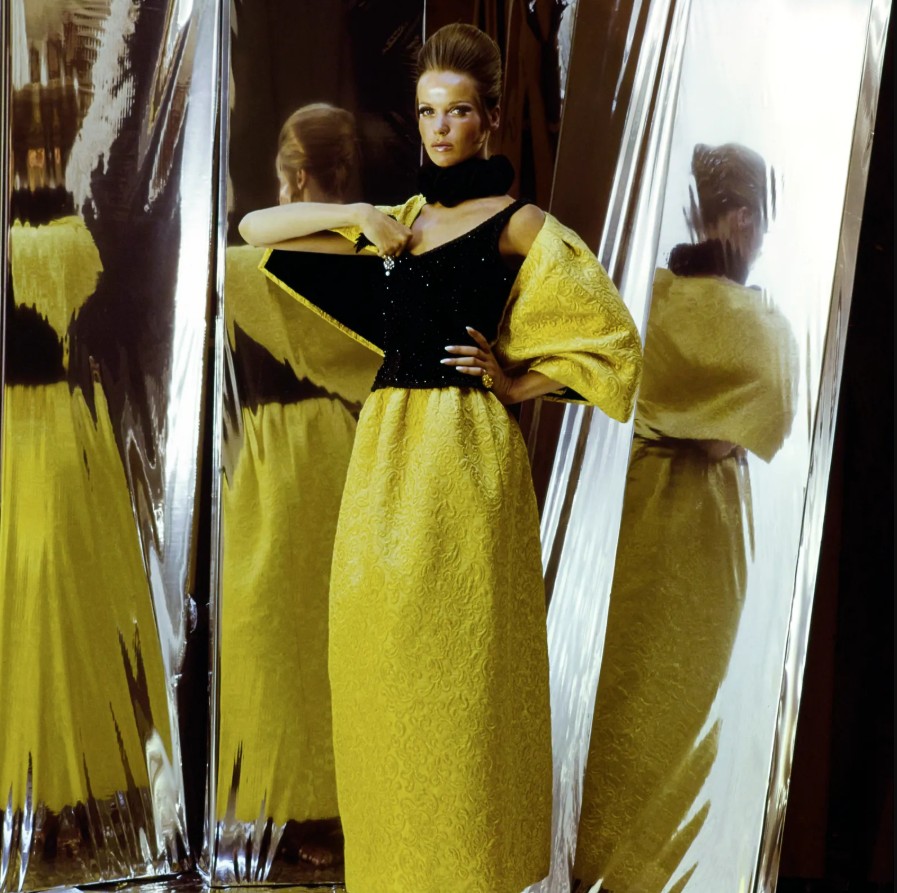
Source: Vogue – Helmut Newton
Her breakthrough was supported by Diana Vreeland, the influential editor-in-chief of American Vogue, who encouraged photographers and models to experiment beyond traditional fashion imagery.
Veruschka went on to appear on 13 American Vogue covers, becoming one of the most recognizable and sought-after models of her generation.
She helped establish the foundations of modern supermodel culture, in which a model’s personality and creative identity could become as important as the clothing she represented.
The Woman Who Changed Fashion Photography
Veruschka collaborated with some of the most influential photographers of the twentieth century, including Richard Avedon, Irving Penn, Helmut Newton, Horst P. Horst, David Bailey, and Franco Rubartelli.
Her collaborations were distinguished by a willingness to experiment. Rather than treating modeling as the simple presentation of clothing, she approached it as a form of artistic performance.
Movement, dramatic gestures, unusual compositions, and imaginative transformations became central elements of her work.
One of her most celebrated projects was Richard Avedon’s ambitious fashion editorial, The Great Fur Caravan, published in Vogue on October 15, 1966.
Photographed against the dramatic winter landscapes of Japan, the production demonstrated how fashion photography could combine clothing, storytelling, environmental scenery, and theatrical performance.
In March 1967, Avedon and Veruschka collaborated on another extraordinary Vogue editorial spanning 25 pages.
These projects helped expand the artistic possibilities of fashion publishing and demonstrated that a model could contribute actively to the photographer’s creative vision.
(Source: The Richard Avedon Foundation and Vogue)
Becoming a Cinematic Icon in Blow-Up
Veruschka’s influence extended beyond fashion magazines when she appeared in Italian director Michelangelo Antonioni’s landmark 1966 film Blow-Up.
Playing a version of herself opposite British actor David Hemmings, she participated in one of the most recognizable fashion photography sequences in twentieth-century cinema.
Although her appearance was brief, it introduced her to international audiences who might never have encountered her work in fashion publications.
The film explored the nature of photography, perception, reality, and the cultural atmosphere of 1960s London. It subsequently won the prestigious top prize at the 1967 Cannes Film Festival.
Veruschka in Michelangelo Antonioni’s Blow-Up, 1966
Image link:
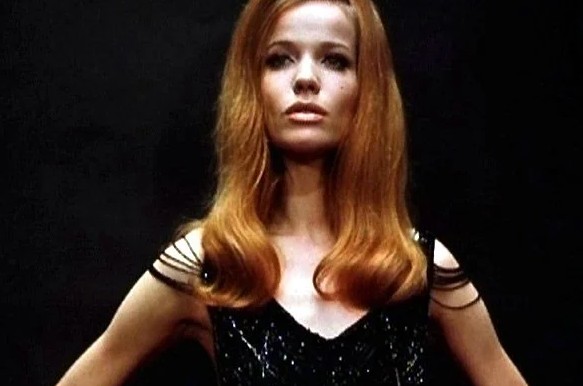
Source: AdoroCinema – Blow-Up film archive
Her growing fame reached another milestone in August 1967, when she appeared on the cover of LIFE magazine.
At a time when fashion models were still largely known within the fashion industry, Veruschka had become a cultural celebrity with an audience extending far beyond it.
Her influence was not limited to her appearance. She represented a changing understanding of femininity, individuality, and creative freedom during one of the twentieth century’s most transformative decades.
Her Extraordinary Partnership With Franco Rubartelli
Among the most significant creative relationships of Veruschka’s career was her partnership with Italian photographer Franco Rubartelli.
The pair collaborated extensively throughout the 1960s, producing elaborate fashion stories that incorporated unusual landscapes, experimental makeup, theatrical costumes, and artistic concepts.
Their work frequently challenged the boundaries separating commercial photography from fine art.
Rubartelli later described how their collaboration involved developing ideas together, researching visual themes, experimenting with materials, and adapting their concepts to the environments in which they worked.
Veruschka photographed by Franco Rubartelli for Vogue, May 1968
Image link:
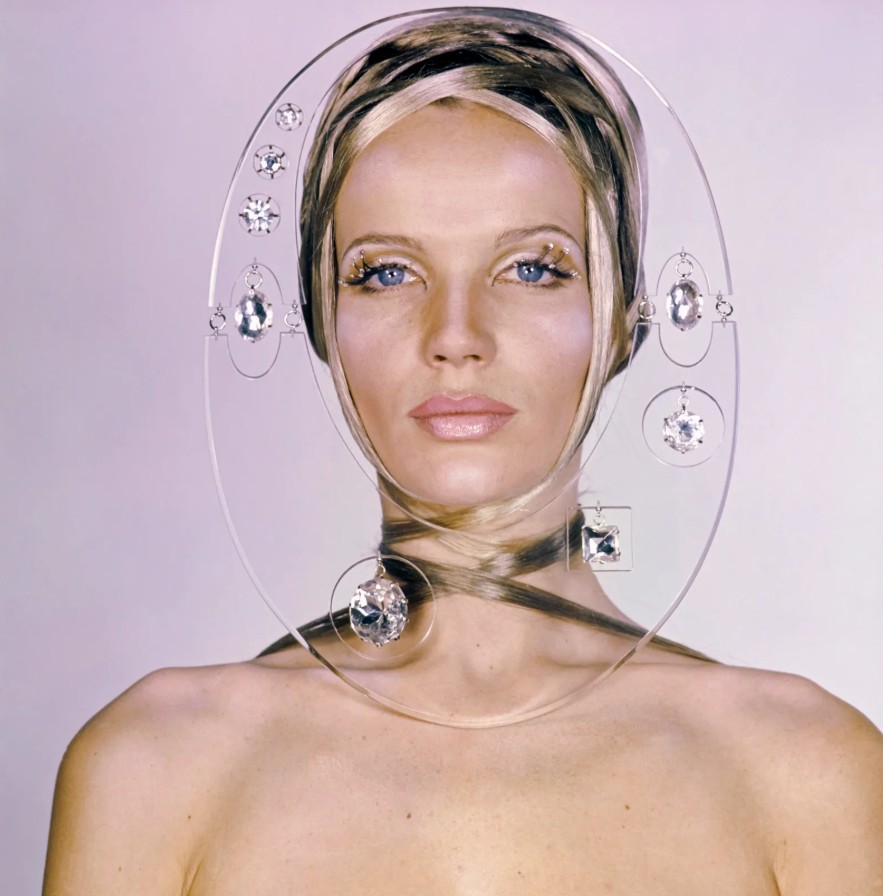
Source: Vogue – Franco Rubartelli
Through collaborations such as these, Veruschka became more than a subject standing before a camera. She became an active participant in constructing the visual language that defined her career.
Her ability to transform herself into dramatically different characters also anticipated developments that would become increasingly prominent in contemporary fashion photography.
Walking Away From Mainstream Modeling
Despite her remarkable commercial success, Veruschka gradually became dissatisfied with the limitations of the fashion industry.
By the mid-1970s, she had largely withdrawn from conventional modeling and redirected her attention toward independent artistic projects.
For Veruschka, being admired for her beauty was not necessarily the same as being understood as an artist.
She collaborated with German artist Holger Trülzsch on experimental body-painting projects that explored identity, transformation, and camouflage.
In these works, the human body became an artistic surface capable of blending into natural landscapes, architectural structures, and painted environments.
The resulting photographs challenged conventional expectations of beauty and questioned how people perceive the human figure.
Her work was eventually recognized through exhibitions, including Veruschka Self-Portraits, presented at the Helmut Newton Foundation in Berlin in 2006.
(Source: Berlin State Museums)
From the Runway to James Bond
Although she stepped away from mainstream modeling, Veruschka never completely abandoned fashion or cinema.
In 1994, she returned to the runway for Chanel under the creative direction of Karl Lagerfeld.
She also made occasional film appearances, including a role in the 2006 James Bond movie Casino Royale, starring Daniel Craig.
In 2010, at the age of 71, she appeared in Giles Deacon’s Spring 2011 fashion show in London.
These appearances demonstrated that her influence had survived decades of changing fashion trends. Designers continued to recognize the qualities that had made her extraordinary during the 1960s: individuality, dramatic presence, and artistic sophistication.
Defying Fashion’s Obsession With Youth
In 2017, Veruschka made another celebrated return when Swedish fashion house Acne Studios selected her to model its Resort 2018 collection.
She was 78 years old.
Her involvement challenged an industry frequently criticized for prioritizing youth and demonstrated that creative expression and personal style do not have an expiration date.
Rather than simply recreating her famous appearance from earlier decades, Veruschka continued to participate in contemporary fashion on her own terms.
Her later career offered an alternative perspective on aging. It showed that a woman’s artistic relevance does not have to disappear as she grows older.
(Source: W Magazine)
Veruschka in Her Later Years: 2025–2026
After returning to Germany in 2005, Veruschka spent her later years living in Berlin, largely away from the intense international publicity that had accompanied her modeling career.
She continued to identify strongly with her artistic work rather than allowing her reputation to rest exclusively on her accomplishments as a young model.
In a revealing interview conducted in 2017, she discussed the challenges of aging, the limitations imposed by public perceptions of beauty, and her desire to continue exploring new forms of creative expression.
Following her death in November 2026, DUST Magazine republished that conversation as a tribute to her extraordinary life.
Veruschka in her later years, photographed by Brett Lloyd in 2017 and republished in November 2026
Image link:
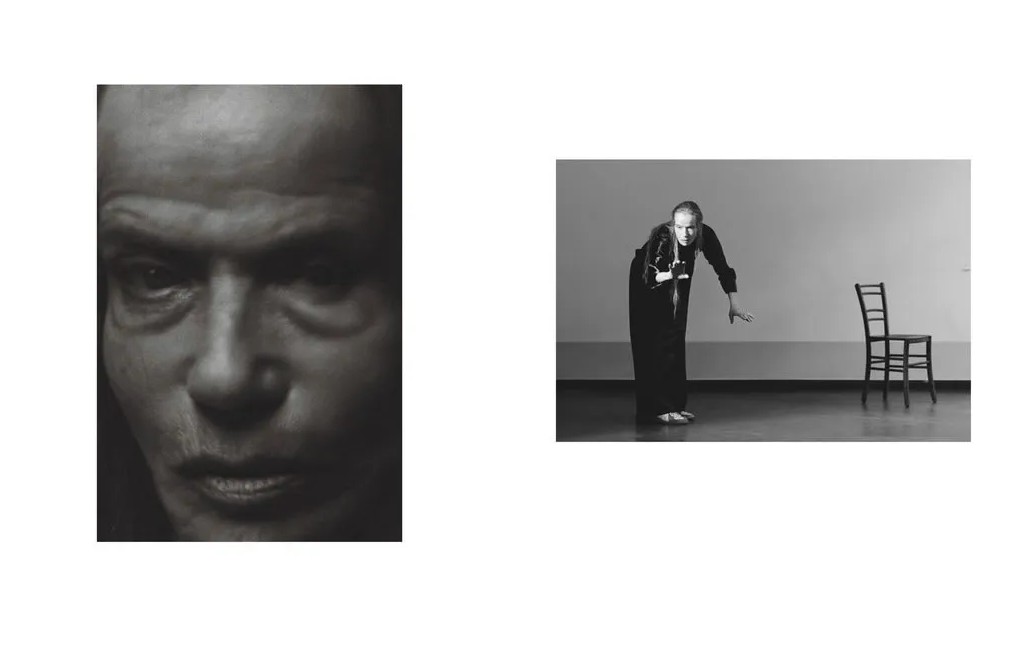
Source: DUST Magazine – Brett Lloyd
Although this photograph was republished in 2026, it belongs to her 2017 photographic session and is not a newly taken portrait.
Her increasingly private lifestyle meant that the public saw less of her during her final years. Nevertheless, her contributions to fashion and contemporary art continued to receive recognition.
Remembering a Woman Who Was Far More Than a Supermodel
Following the announcement of her death, members of the international fashion community paid tribute to Veruschka’s creativity, individuality, and lasting influence.
Her legacy can be seen in the work of generations of models who have become creative collaborators, performers, artists, and influential cultural figures in their own right.
(Source: Vogue – The Art of Being Veruschka)
Yet her life deserves to be remembered for more than magazine covers, glamorous photographs, or international fame.
She was a child who survived the devastation of World War II, a young woman who overcame professional rejection, an international celebrity who questioned the industry that made her famous, and an artist who continued reinventing herself well into her later years.
Veruschka did not simply wear fashion. She helped change what fashion could express.
Her death at 87 marks the passing of an extraordinary figure whose work helped shape modern photography, fashion, cinema, and artistic performance.
From the uncertain beginnings of her childhood in wartime Europe to the international stages of New York, Paris, London, and beyond, her remarkable journey remains a testament to the power of individuality and creative freedom.
The world may remember her first as Veruschka, the legendary supermodel.
But Vera von Lehndorff was always something more: an artist who refused to let the world define her.
May she rest in peace.
May 14, 1939 – November 24, 2026.