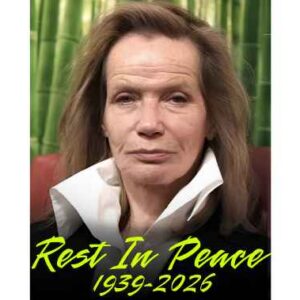
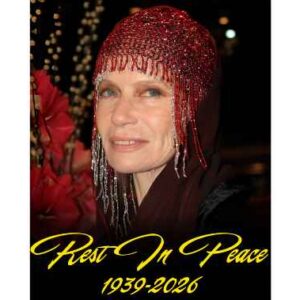
From the devastating loss of her father during World War II to becoming one of the most celebrated women in fashion history, Vera von Lehndorff lived an extraordinary life defined by survival, reinvention, and artistic freedom.
The fashion world is mourning the loss of one of its most influential and unforgettable figures.
Vera von Lehndorff, internationally known as Veruschka, died at her home in Berlin, Germany, on November 24, 2026. She was 87 years old.
Her death was confirmed through the fashion company’s website belonging to her younger sister, Catharina Kappelhoff-Wulff. According to reports from Germany, the legendary model was surrounded by family and friends when she passed away.
Long before supermodels became international celebrities, Veruschka helped establish what it meant to be one. She challenged conventional standards of beauty, transformed fashion photography into a form of artistic expression, and inspired generations of photographers, designers, actresses, and models.
Yet behind her remarkable beauty and international success was a childhood marked by unimaginable loss.
(Source: People | DUST Magazine)
A Childhood Shattered by World War II
Born on May 14, 1939, in Königsberg, East Prussia, now Kaliningrad, Russia, Vera Gottliebe Anna Gräfin von Lehndorff-Steinort belonged to a distinguished German aristocratic family.
She spent her earliest years at Steinort Castle, a historic family estate located in what is now northeastern Poland.
Her father, Count Heinrich von Lehndorff-Steinort, and her mother, Countess Gottliebe von Lehndorff, raised four daughters: Eleonore, Vera, Gabriele, and Catharina.
Although Vera was born into privilege, the outbreak of World War II would destroy the world her family had known for generations.
Her father became involved in the German resistance after witnessing atrocities committed by the Nazi regime. He subsequently participated in the resistance movement associated with the failed July 20, 1944, plot to assassinate Adolf Hitler.
The consequences were devastating.
In September 1944, Heinrich von Lehndorff was executed by the Nazi authorities.
Vera was only five years old.
Her mother was imprisoned, while Vera and her older siblings among the three children already born were separated from their mother and placed in a children’s institution under the Nazi policy of collective family punishment.
Her youngest sister, Catharina, was born while their mother was in custody.
The family eventually reunited, but their former home, social position, and sense of security had been irreversibly disrupted.
Years later, Vera spoke openly about the lasting consequences of those experiences, revealing a deeply personal history that stood in stark contrast to the glamorous world in which she would eventually become famous.
(Source: DUST Magazine — Interview with Vera von Lehndorff)
Archival photograph — Five-year-old Vera von Lehndorff with her father, Heinrich, at Steinort Castle, 1944.
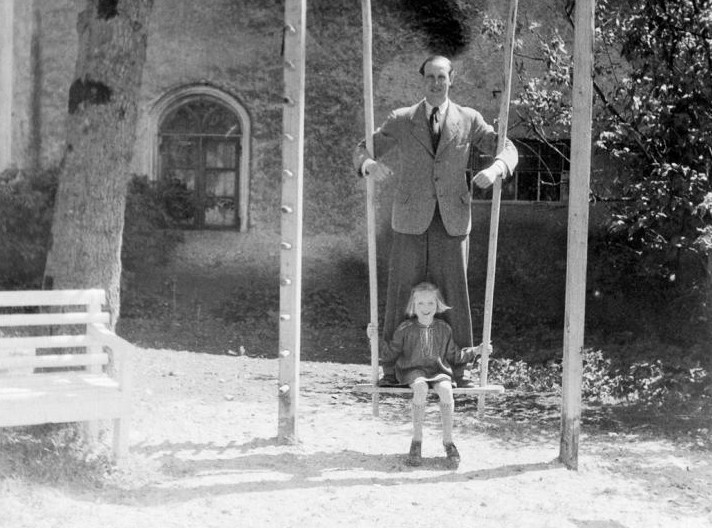
Source: Copernico — Lehndorff Family Archive
Archival access note: The image is indexed online, but its hosting server currently restricts direct access.
From a German Countess to an Aspiring Fashion Model
Despite the hardships of her childhood, Vera developed a strong interest in art and creative expression.
She studied art in Hamburg before traveling to Florence, Italy, where her life took an unexpected turn.
In 1959, at approximately 20 years old, she was discovered by Italian photographer Ugo Mulas.
Standing around six feet tall, with striking facial features and unusually long limbs, Vera possessed an appearance that distinguished her from many conventional fashion models of the period.
However, success did not come immediately.
Her early attempts to establish herself in New York were disappointing. The fashion industry was not yet accustomed to her unconventional proportions or her distinctive presence.
Rather than abandoning her ambitions, Vera decided to reinvent herself.
She adopted the professional name Veruschka, a Russian diminutive of Vera, and developed a mysterious, deliberately theatrical public persona.
Her transformation was more than a change of name. It was an exercise in constructing an artistic identity.
She understood that being beautiful was not necessarily enough to succeed in an industry filled with beautiful women. She wanted to create a presence that people would remember.
That decision changed the course of her life.
Vera von Lehndorff at Café Cadore in Munich, Germany, in 1960, at approximately 21 years old.
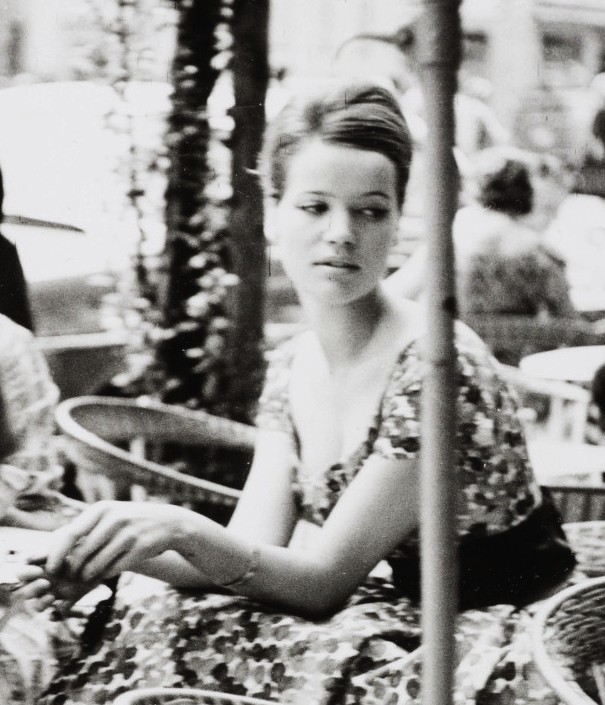
Source: Wikimedia Commons / Münchner Stadtmuseum
Photographer: Barbara Niggl Radloff. Cropped archival photograph. License: CC BY-SA 4.0.
Becoming One of the World’s Original Supermodels
During the 1960s, Veruschka’s career gained extraordinary momentum.
She found an influential supporter in Diana Vreeland, the legendary editor-in-chief of American Vogue, who recognized the creative possibilities of her unusual appearance and expressive modeling style.
Veruschka became one of the most sought-after models of her generation.
She appeared on 13 American Vogue covers and collaborated with some of the greatest photographers in fashion history, including:
- Richard Avedon
- Irving Penn
- Horst P. Horst
- Helmut Newton
- David Bailey
- Franco Rubartelli
Unlike models who primarily concentrated on presenting clothing elegantly, Veruschka approached fashion photography as a collaborative artistic performance.
She experimented with movement, exaggerated gestures, dramatic expressions, unusual body positions, and imaginative characters.
Her photographs demonstrated that a model could contribute to the creative direction of an image rather than simply serve as its subject.
By the late 1960s, Veruschka had achieved international recognition beyond the traditional boundaries of the fashion industry.
Her appearance on the cover of LIFE magazine in 1967 reflected the growing cultural importance of fashion models as celebrities in their own right.
(Source: American Vogue)
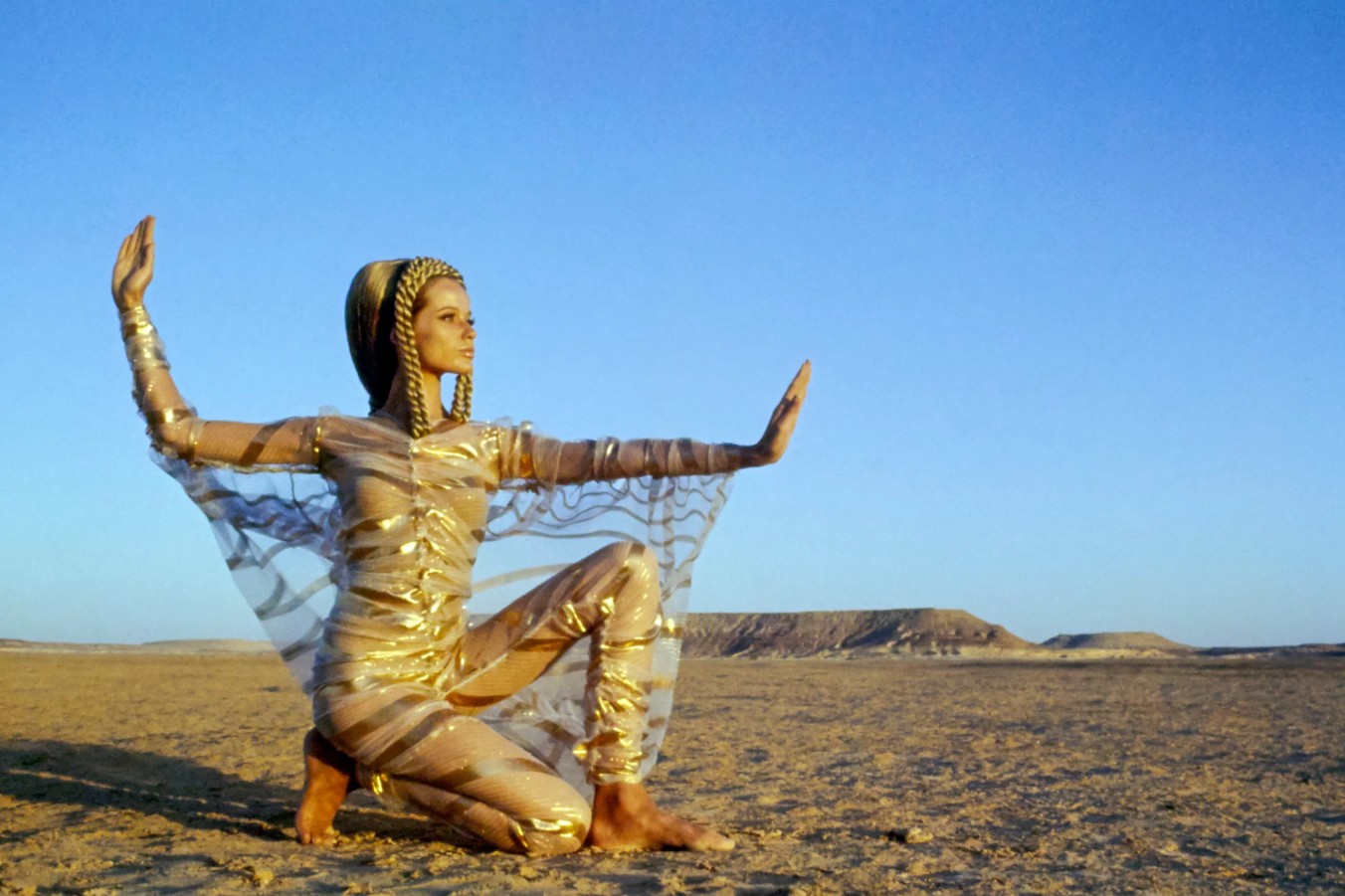
Veruschka photographed by Franco Rubartelli for Vogue, April 1967, during the height of her international modeling career.
Source: Vogue
The Extraordinary Photographic Collaborations That Changed Fashion
One of Veruschka’s most important creative relationships was with American photographer Richard Avedon.
Avedon recognized her ability to translate ambitious photographic concepts into compelling physical performances.
Their collaborations helped move fashion photography away from rigid studio conventions and toward more dynamic visual storytelling.
Among their most celebrated projects was The Great Fur Caravan, an extensive fashion editorial photographed in Japan and published in Vogue on October 15, 1966.
The ambitious production incorporated elaborate styling, challenging winter landscapes, and cinematic compositions.
It demonstrated that a fashion editorial could function as an elaborate visual narrative rather than merely a collection of photographs showcasing expensive clothing.
Veruschka also developed a significant creative and romantic partnership with Italian photographer Franco Rubartelli.
Together, they created images that explored transformation, movement, exotic landscapes, and theatrical identities.
Their celebrated 1968 photograph featuring an Yves Saint Laurent safari jacket became an enduring representation of the changing image of women in fashion.
The photographs helped communicate independence and confidence at a time when women’s social and cultural roles were undergoing significant change.
(Source: Vogue Archive — The Great Fur Caravan | Vogue — Franco Rubartelli’s Photography)
The Film Appearance That Made Her a Cultural Icon
Veruschka’s influence extended far beyond fashion magazines.
In 1966, she appeared in Italian director Michelangelo Antonioni’s groundbreaking film Blow-Up.
Set in London during the cultural revolution of the 1960s, the film explored photography, perception, desire, and the uncertain relationship between images and reality.
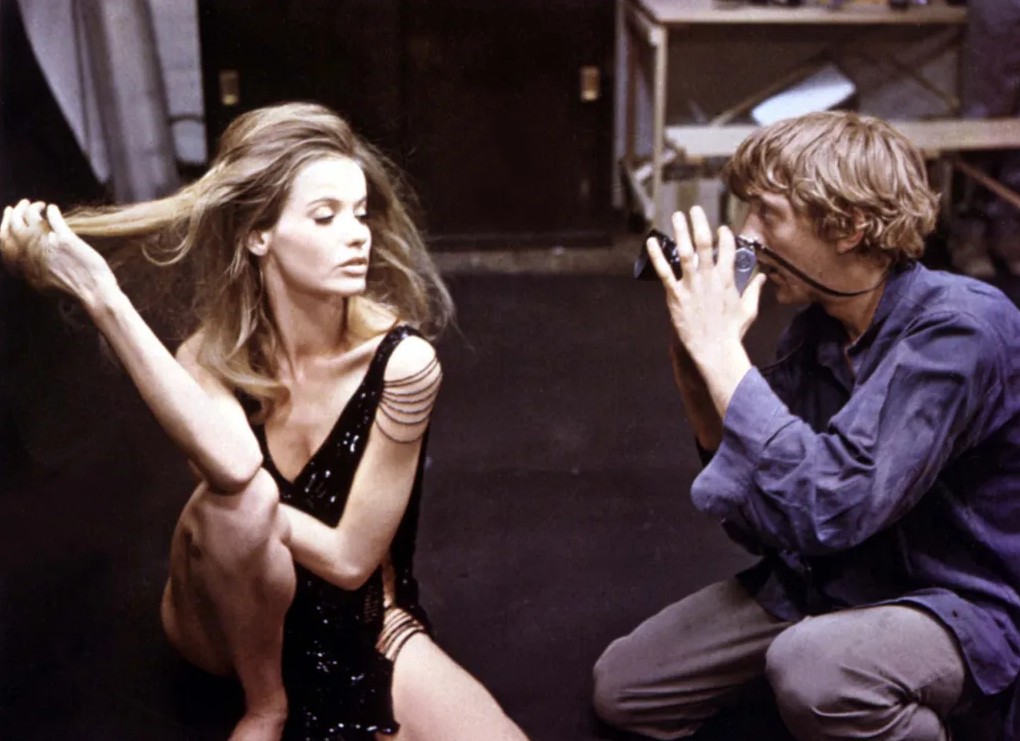
Veruschka appeared as a version of herself opposite British actor David Hemmings, who portrayed a fashion photographer.
Although her appearance was brief, the photographic sequence became one of the film’s most recognizable moments.
Her performance captured the energy, experimentation, and unconventional glamour associated with Swinging London.
The film introduced Veruschka to an international cinema audience and strengthened her reputation as a cultural figure rather than simply a fashion model.
Decades later, she returned to the big screen in another internationally recognized production.
In 2006, she made a cameo appearance as a poker player in the James Bond film Casino Royale, starring Daniel Craig.
(Source: People | Vogue Germany)
Veruschka and David Hemmings in Michelangelo Antonioni’s influential 1966 film, Blow-Up.
Source: Vogue
Walking Away From Conventional Beauty
At a time when many models might have devoted themselves to preserving their commercial success, Veruschka began questioning the limitations of the fashion industry.
By the mid-1970s, her interests increasingly shifted toward independent artistic experimentation.
Working with German artist and photographer Holger Trülzsch, she developed an extensive collection of photographic performances involving body painting and visual camouflage.
Their work transformed the human body into a medium for exploring identity, illusion, visibility, and the relationship between people and their surroundings.
Through carefully applied paint, her figure could merge with natural landscapes, textured walls, and architectural surfaces.
Other projects transformed her appearance into entirely different characters.
This artistic direction was particularly remarkable because Veruschka had built her international reputation around being recognizable.
She was now deliberately experimenting with ways to become unrecognizable.
Her work challenged the assumption that a beautiful woman’s primary responsibility was to remain beautiful for public consumption.
Instead, she explored how physical appearance could be manipulated, questioned, and transformed through art.
Her collaborations with Trülzsch became associated with pioneering developments in artistic body painting and were exhibited internationally.
(Source: East Prussian State Museum)
An Icon Who Refused to Be Defined by Age
Although Veruschka increasingly concentrated on art, the fashion industry never completely lost its fascination with her.
In 1994, she returned to the runway for Karl Lagerfeld at Chanel.
At the age of 71, she appeared in the Giles Deacon Spring 2011 fashion show, demonstrating that her distinctive presence remained powerful decades after her initial breakthrough.
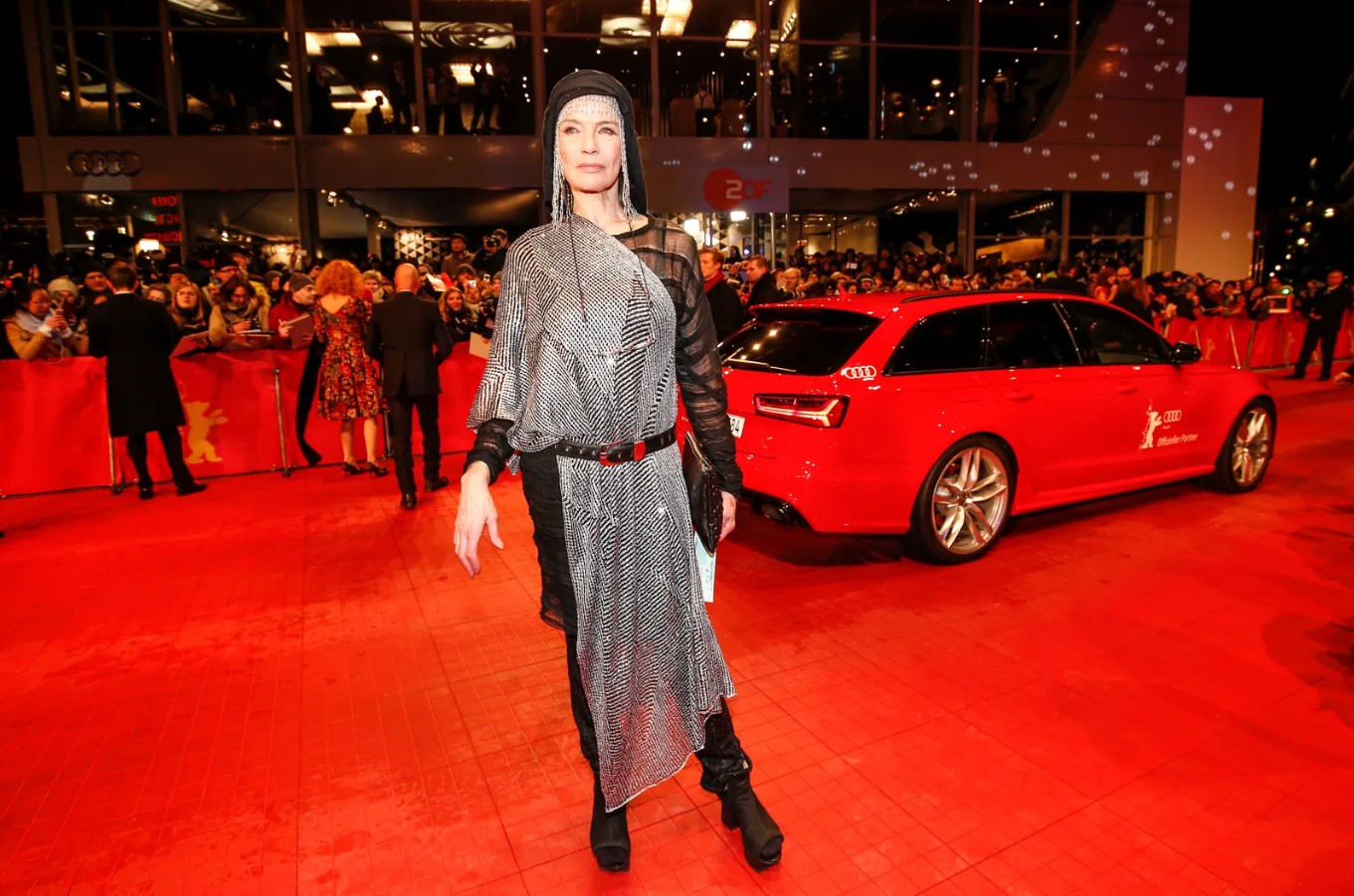
She continued making occasional public appearances, including attending the Berlin International Film Festival in 2015.
Her mature appearance represented a different kind of beauty from the one celebrated during the 1960s, but her originality and willingness to experiment remained unchanged.
Veruschka attending the Berlin International Film Festival in February 2015.
Source: Vogue
Photo credit: Getty Images, as published by Vogue.
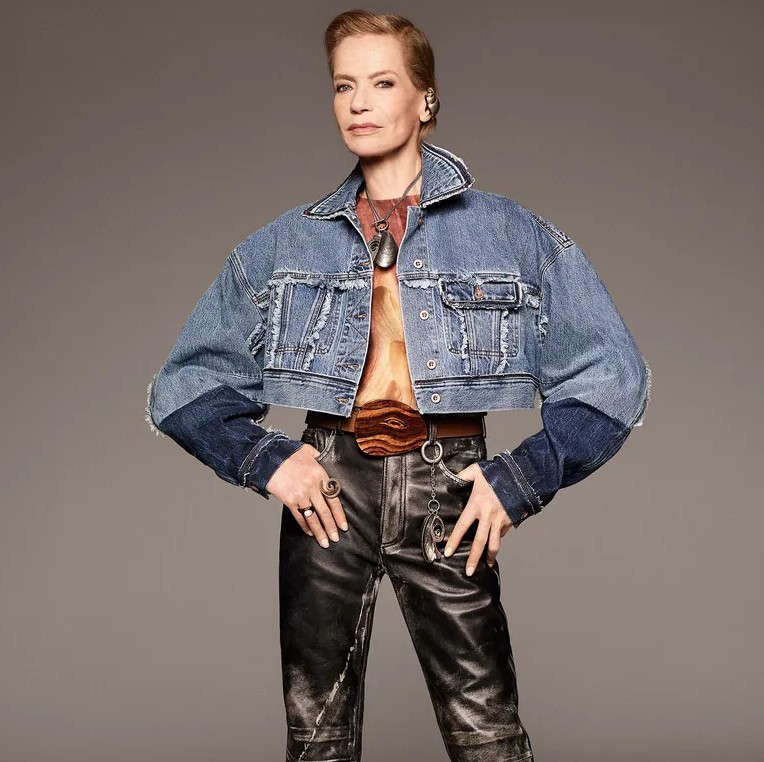
In June 2017, Veruschka returned to the international fashion spotlight when Swedish fashion house Acne Studios selected her to model its Resort 2018 collection.
She was 78 years old.
At a time when fashion campaigns overwhelmingly emphasized youth, her participation offered a refreshing alternative.
The collection highlighted how individuality, creative confidence, and personal style could remain relevant throughout a person’s lifetime.
Her involvement challenged the idea that older women should disappear from mainstream fashion imagery.
Veruschka modeling for Acne Studios at the age of 78, photographed in 2017 for the Resort 2018 collection.
Source: Vogue / Acne Studios
Her Artistic Legacy Remained Relevant in 2026
In her later years, Veruschka lived a more private life in Berlin, away from the constant attention that had surrounded her during the height of her modeling career.
Nevertheless, her artistic achievements continued to receive institutional recognition.
From April 25 through October 18, 2026, the East Prussian State Museum in Lüneburg, Germany, presented a special exhibition titled The Seen and the Unseen: Holger Trülzsch & Vera Lehndorff (Veruschka).
The exhibition showcased selected photographic performances involving body painting, highlighting the artistic significance of her collaborations with Trülzsch during the 1970s and 1980s.
The exhibition provided an opportunity for contemporary audiences to encounter a dimension of Veruschka’s career that extended well beyond conventional fashion photography.
It was also a reminder that the woman who had once been celebrated primarily for her appearance had established an enduring artistic identity of her own.
The exhibition closed just over a month before her death.
(Source: East Prussian State Museum — 2026 Exhibition)
The Fashion World Says Goodbye
Following the announcement of her death, members of the international fashion community began reflecting on Veruschka’s extraordinary contribution to photography, modeling, and visual culture.
On November 26, 2026, Vogue published tributes from fashion professionals who remembered her creative imagination and the influence of her work on their own careers.
Her legacy can be seen in the modern understanding of models as creative collaborators, performers, and cultural personalities.
Her career helped demonstrate that modeling could involve intellectual curiosity, artistic interpretation, and creative independence.
She also challenged the notion that a woman’s relevance must diminish as she grows older.
(Source: Vogue — The Art of Being Veruschka: Fashion Pays Tribute to a Legend)
Remembering the Woman Behind the Legend
Veruschka’s life contained extraordinary contrasts.
She was born a German countess but experienced displacement and family separation during childhood.
She lost her father at an age when most children are just beginning school.
She entered an industry that initially struggled to understand her unconventional appearance, only to become one of its most celebrated figures.
And when the world came to recognize her beauty, she chose to explore forms of artistic expression that challenged the very importance of physical beauty.
Her achievements cannot be measured solely by magazine covers, famous photographs, or runway appearances.
They must also be understood through the independence with which she pursued her creative ambitions.
Veruschka demonstrated that identity need not remain fixed, that artistic expression need not conform to expectations, and that growing older need not mean surrendering one’s individuality.
Vera von Lehndorff — Veruschka — 1939–2026.
The little girl whose childhood was shattered by war became a woman whose imagination helped transform an entire industry.
She leaves behind an extraordinary body of work, a lasting influence on international fashion, and a powerful example of a life spent refusing to be defined by a single image.
May she rest in peace.