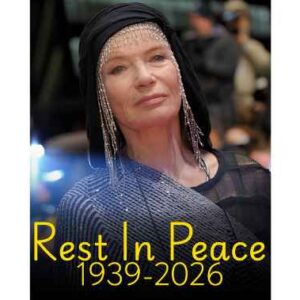
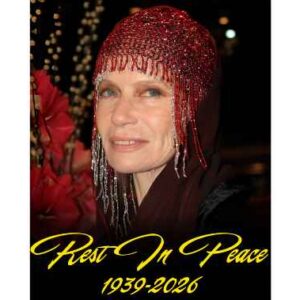
Long before the world knew the names of Cindy Crawford, Naomi Campbell, and Claudia Schiffer, there was Veruschka — a remarkable woman who helped redefine the very meaning of a supermodel.
The fashion world is mourning the loss of Vera von Lehndorff, internationally known as Veruschka, who passed away at her home in Berlin on November 24, 2026, at the age of 87.
Her death was announced through the clothing brand of her sister, Catharina Kappelhoff-Wulff. She reportedly spent her final moments surrounded by friends and family.
Celebrated for her extraordinary presence, artistic imagination, and unconventional beauty, Veruschka helped transform fashion photography into an internationally recognized form of creative expression.
Yet behind the glamorous magazine covers was a woman whose childhood had been marked by war, persecution, displacement, and devastating personal loss.
A Childhood Shattered by World War II
Born on May 14, 1939, in Königsberg, East Prussia, Vera belonged to an aristocratic German family. She spent her earliest years at her family’s ancestral estate, Steinort Castle, in what is now Poland.
Although she was born into privilege, the circumstances of World War II would dramatically alter the course of her life.
Her father, Count Heinrich von Lehndorff-Steinort, became involved in the German resistance against Adolf Hitler and participated in the conspiracy that culminated in the failed assassination attempt of July 20, 1944.
Following the failure of the plot, he was arrested and executed by the Nazi regime in September 1944.
Vera was only five years old.
Vera von Lehndorff as a young child with her father, Count Heinrich von Lehndorff.
Source: Berlin-Brandenburg Academy of Sciences and Humanities — Lehndorff Family Archive
The tragedy did not end with her father’s death. Her pregnant mother was detained, while Vera and her sisters were separated from their family under the Nazi policy of collective punishment.
The children were placed in institutional custody, experiencing the consequences of political events far beyond their understanding.
Although the family eventually reunited after the war, the aristocratic existence they had once known was gone. Their ancestral home was lost, and they faced the uncertainty of rebuilding their lives in postwar Europe.
The Lehndorff family reunited after World War II, photographed in 1949. Vera was approximately ten years old.
Source: Berlin-Brandenburg Academy of Sciences and Humanities — Lehndorff Family Archive
Decades later, Vera recalled her family’s experiences in an interview with filmmaker Rosa von Praunheim, offering a deeply personal account of her parents’ resistance to the Nazi regime.
Her early life remains an important part of understanding the woman behind the internationally famous name.
The Young Woman Who Never Expected to Become a Supermodel
Before becoming a fashion sensation, Vera dreamed of becoming an artist.
She pursued artistic studies in Hamburg before moving to Florence, Italy, where an unexpected encounter would change her future.
In 1959, when she was approximately 20 years old, Italian photographer Ugo Mulas recognized her potential and introduced her to the world of fashion photography.
Standing more than six feet tall, Vera possessed an appearance that distinguished her from many conventional models of the period.
Nevertheless, international success did not arrive immediately. Her initial attempt to establish herself in New York proved disappointing.
Rather than abandoning her ambitions, she began experimenting with her professional identity.
She adopted the name Veruschka, a Russian diminutive of Vera, and developed a mysterious, expressive persona that photographers and fashion editors would soon find irresistible.
A young Veruschka photographed by Johnny Moncada during her formative modeling years in the early 1960s.
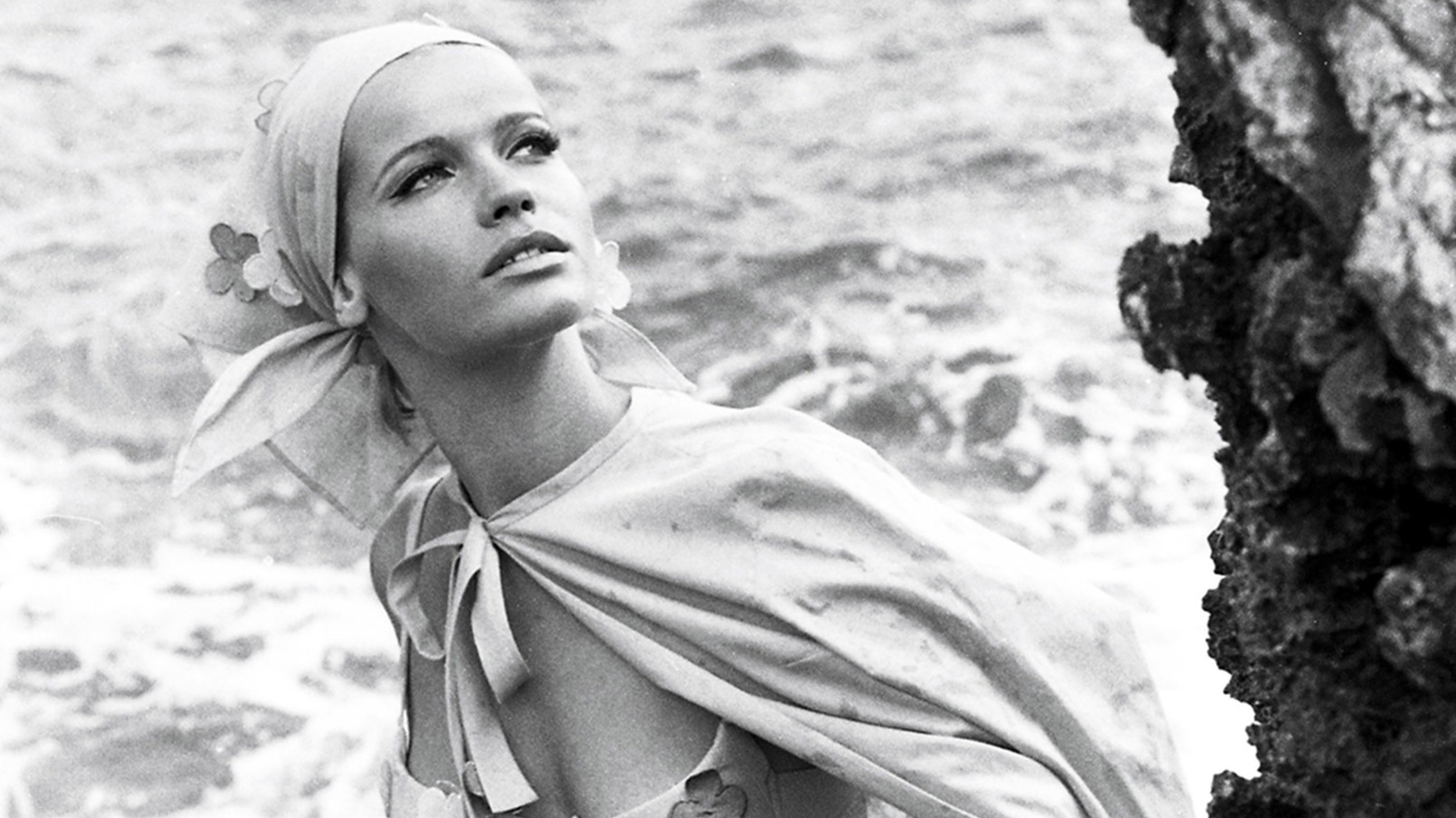
Source: The Daily Beast — Johnny Moncada Photography Archive
Her collaborations with photographers in Italy helped establish the artistic approach that would distinguish her throughout her career.
When she returned to New York in 1964, the fashion industry was becoming increasingly receptive to unconventional personalities and individualistic forms of beauty.
Veruschka had arrived at precisely the right cultural moment.
Becoming One of the World’s First Supermodels
Under the leadership of legendary Vogue editor Diana Vreeland, fashion photography was becoming more imaginative, theatrical, and adventurous.
Veruschka emerged as one of its most compelling stars.
She collaborated with some of the greatest photographers of the twentieth century, including Richard Avedon, Irving Penn, Horst P. Horst, David Bailey, and Franco Rubartelli.
According to Vogue’s obituary, she appeared on 13 American Vogue covers, becoming one of the most sought-after models of her generation.
Her importance, however, extended far beyond the number of magazine covers she appeared on.
Veruschka approached modeling as a creative performance. Her unusual poses, dramatic physical movements, and ability to adopt entirely different visual identities offered photographers possibilities beyond conventional studio portraiture.
Her appearance could communicate elegance, mystery, strength, vulnerability, or theatrical fantasy.
She was helping establish a new understanding of what a fashion model could contribute to an image.
The Woman Who Changed Fashion Photography
Among her most celebrated professional achievements was her collaboration with Richard Avedon on The Great Fur Caravan, a monumental Vogue fashion editorial photographed in Japan and published on October 15, 1966.
The project placed fashion within dramatic winter landscapes, producing photographs that combined clothing, movement, environmental storytelling, and artistic ambition.
It became one of the most famously extravagant editorial productions of its era.
A separate, 25-page collaboration with Avedon appeared in the March 1967 issue of Vogue, further demonstrating Veruschka’s extraordinary command of movement and expression.
Her partnership with Italian photographer Franco Rubartelli was equally significant.
Together, they created images that helped challenge conventional representations of femininity, introducing a visual language that could be glamorous, adventurous, powerful, and deliberately unconventional.
One of their most enduring collaborations featured Veruschka wearing Yves Saint Laurent’s celebrated safari jacket for French Vogue in 1968.
Veruschka wearing Yves Saint Laurent’s iconic safari jacket, photographed by Franco Rubartelli for Vogue Paris, August 1968.
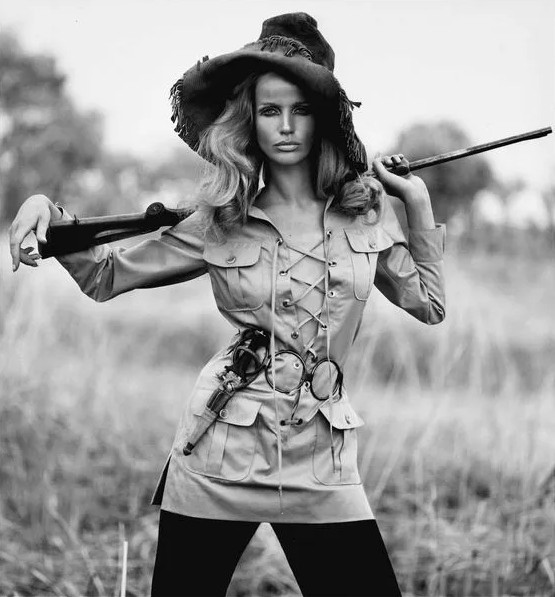
Source: Vogue Italia — Franco Rubartelli
These photographs helped establish a broader role for the fashion model: not merely displaying a designer’s clothing but contributing personality, movement, and interpretation to the finished work.
From Fashion Magazines to the Silver Screen
Veruschka’s international celebrity grew even further in 1966 when she appeared in Michelangelo Antonioni’s groundbreaking film Blow-Up.
Set against the cultural backdrop of 1960s London, the film explored photography, perception, celebrity, and the uncertain relationship between appearances and reality.
Veruschka portrayed a version of herself opposite British actor David Hemmings, who played a fashion photographer.
Although her appearance was brief, it became one of the movie’s most recognizable sequences and secured her place in the cinematic history of the decade.
An archival portrait of Veruschka associated with the 1966 film Blow-Up.
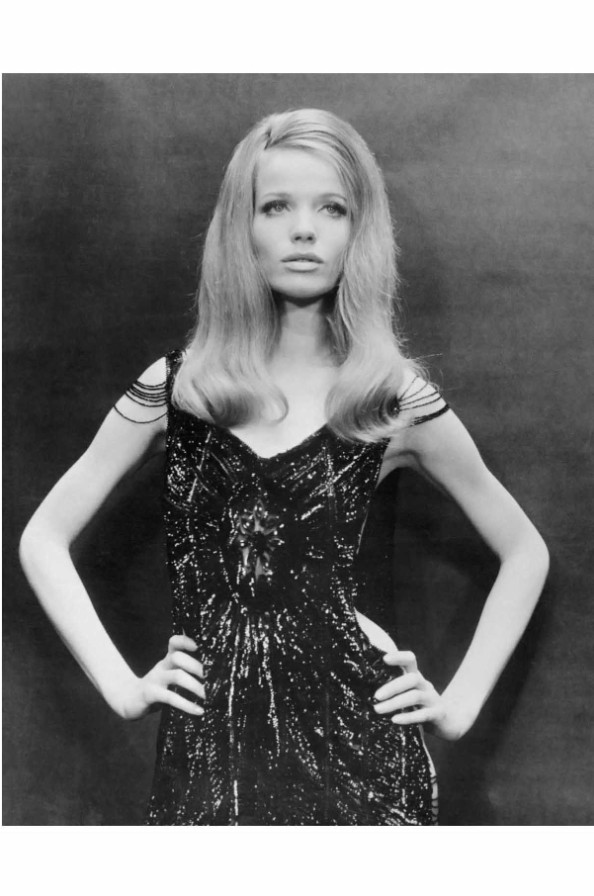
Source: Pleasurephoto — Bettmann/Corbis archival photograph
Her relationship with cinema continued long after the height of her modeling career.
In 2006, she returned to mainstream international cinema with an appearance as a poker player in Casino Royale, the James Bond film starring Daniel Craig.
For audiences who remembered her from the 1960s, it was another opportunity to see a cultural icon whose distinctive presence had endured across generations.
Walking Away From Fame to Rediscover Herself
At the height of her celebrity, Veruschka possessed many of the things aspiring models dreamed of achieving.
She had international recognition, prestigious magazine covers, influential collaborators, and opportunities to work throughout the world.
Yet fame alone was not enough to satisfy her artistic ambitions.
By the mid-1970s, she began distancing herself from mainstream commercial modeling and concentrating on experimental art.
Working with German artist Holger Trülzsch, she developed photographic performances involving elaborate body painting, camouflage, and visual transformation.
Their work explored the boundaries between the human body and its surroundings. Through carefully constructed compositions, her physical form could appear to merge with natural landscapes, trees, and architectural surfaces.
Instead of using her appearance exclusively to attract attention, she explored how an artist could deliberately disappear within an image.
It was a striking departure from the industry that had made her famous.
Her artistic career demonstrated that her creative interests had always extended beyond fashion and conventional definitions of beauty.
Proving That Beauty Has No Expiration Date
Although Veruschka moved away from full-time modeling, the fashion industry never entirely forgot her.
In 1994, she returned to the runway for Chanel under Karl Lagerfeld.
At the age of 71, she appeared in Giles Deacon’s Spring 2011 fashion show, presented in 2010.
One of her most memorable later-career moments arrived in 2017, when Acne Studios selected her to model its Resort 2018 collection.
She was 78 years old.
At a time when the fashion industry frequently emphasized youth, her return offered a compelling alternative: individuality, confidence, experience, and artistic presence could remain powerful at any age.
Veruschka at age 78, modeling for the Acne Studios Resort 2018 collection, photographed in 2017.
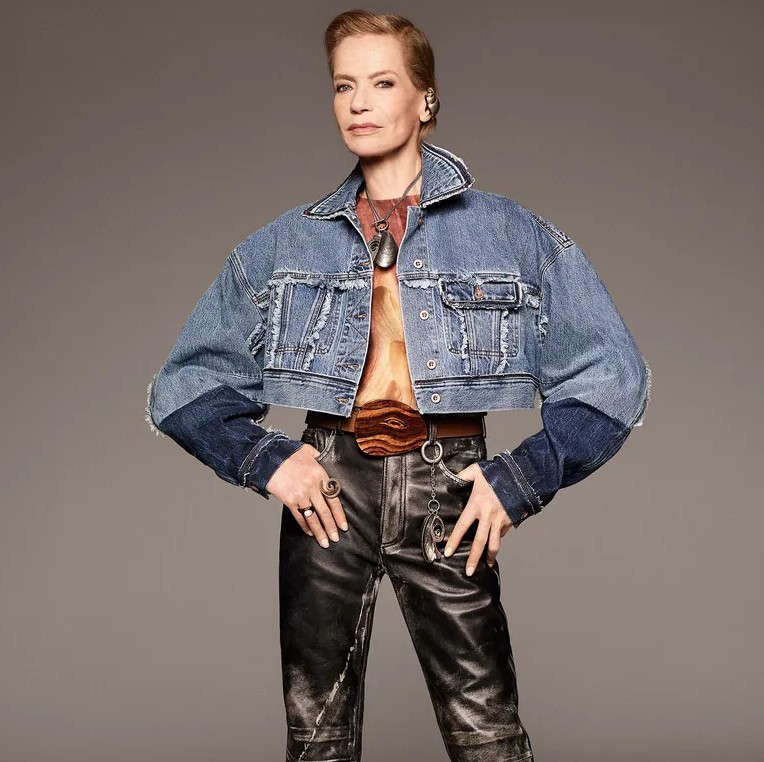
Source: American Vogue — Acne Studios
Her appearance was not simply an exercise in nostalgia.
It demonstrated that an influential model from the 1960s could participate meaningfully in contemporary fashion without having to recreate her youthful appearance.
Her Final Years and Enduring Artistic Legacy
In her later years, Vera lived in Berlin, where her interests continued to include painting, photography, and experimental artistic expression.
She became increasingly removed from the constant public exposure that had characterized her younger life.
According to a November 26, 2026, report by Page Six, her last documented public appearance was at the opening of Louis Vuitton’s Time Capsule exhibition in Berlin in September 2017.
Nevertheless, her artistic achievements continued receiving institutional recognition.
From April 25 through October 18, 2026, the East Prussian State Museum in Lüneburg, Germany, presented The Seen and the Unseen: Holger Trülzsch & Vera Lehndorff (Veruschka).
The exhibition examined the experimental photographic performances they had created together during the 1970s and 1980s.
It was a significant reminder, in the final year of her life, that her contributions extended well beyond fashion magazines.
Source: East Prussian State Museum
Following news of her passing, designers, photographers, and fellow models reflected on the creative influence she had exercised over the fashion industry for decades.
Her legacy remains visible whenever fashion photography prioritizes imagination over convention and recognizes models as active creative collaborators.
Source: Vogue — The Art of Being Veruschka
Remembering Veruschka: 1939–2026
The extraordinary life of Vera von Lehndorff cannot be summarized by a collection of magazine covers or a list of famous photographers.
She was a child who survived the devastating consequences of World War II, a young artist who discovered an unexpected profession, an international fashion icon, an actress, and an experimental artist who refused to remain confined to a single identity.
She experienced the destruction of the world into which she was born and went on to create an entirely different life for herself.
Her greatest achievement may have been her willingness to continually reinvent herself, even when she had already achieved extraordinary success.
Veruschka helped change the way the world understood beauty, creativity, individuality, and the possibilities of growing older.
Although she is gone, the remarkable body of work she leaves behind will continue to inspire generations of artists, photographers, designers, and women who refuse to let age or convention define their potential.
Rest in peace, Vera von Lehndorff.
May 14, 1939 – November 24, 2026.
A legendary supermodel, a visionary artist, and an unforgettable figure in the history of twentieth-century fashion.