Physical attraction often feels instantaneous, effortless, and completely instinctive. When a spark lights up across a room, most people assume it comes from a pure, hardwired personal preference that operates independently of the outside world. Yet behavioral psychologists, sociologists, and relationship researchers have spent decades discovering that what draws someone to a particular body type—such as a slim, slender physique—is rarely a single simple impulse.
Across the globe, men’s aesthetic preferences span the entire spectrum of human shapes and sizes. Still, when examining why some men feel a particularly strong pull toward slim women, five distinct psychological, biological, and cultural forces consistently emerge. While a few of these factors are straightforward and familiar, one of them—number 2 on the list—touches on an unspoken social reality that many people feel uncomfortable admitting out loud.
1. Visual Proportions and Subtle Vitality Cues
At a purely visual level, the human brain is constantly scanning for rapid cues of proportion, symmetry, and physical ease. In evolutionary psychology, researchers have noted for years that initial visual attraction is less about an arbitrary number on a scale and far more about proportional harmony—most famously measured through the waist-to-hip ratio.
For some men, a slender frame accentuates clean skeletal lines, collarbone definition, posture, and agile movement—traits the subconscious brain often associates with youthfulness and high physical energy. However, evolutionary biologists are quick to add an important nuance: these instincts are remarkably flexible. Studies across diverse regions show that in environments where resources feel abundant, preferences tend to lean slightly slimmer, whereas in environments associated with scarcity or high stress, preferences consistently shift toward fuller, curvier builds. What feels “natural” is always in quiet dialogue with the environment around us.

2. The Sensitive Topic: Cultural Conditioning, Status Signaling, and External Validation
Here is the factor many people hesitate to talk about openly—because acknowledging it challenges the comforting belief that our romantic desires belong entirely to us.
Over the past century in much of Western and modern globalized culture, mass media, fashion advertising, and cinema have relentlessly paired a slim female silhouette with prestige, desirability, and social success. Even men who consider themselves entirely independent thinkers grow up absorbing tens of thousands of these subtle visual messages before adulthood.
This cultural backdrop quietly shapes attraction in two sensitive ways:
- The Unconscious “Halo Effect”: Psychologists use the term halo effect to describe how the brain projects unrelated positive traits onto a single visible quality. Because modern wellness culture frequently equates thinness with self-discipline, restraint, and affluence, some observers unconsciously assume a slim partner also possesses greater ambition, vitality, or organization—even though body shape is heavily dictated by genetics and metabolism rather than willpower.
- Peer Perception and Status Anxiety: Perhaps the most sensitive layer of all is social validation. Relationship researchers studying mate-choice dynamics have found that some men—especially those who are highly attuned to social hierarchy or peer approval—feel drawn to body types that society publicly applauds. When a man feels subtle pressure to impress friends, family, or social circles, his private taste can quietly blur with a desire for external approval.
Admitting that social conditioning or peer optics can influence attraction feels uncomfortable for both men and women. Men rarely want to feel their desires are scripted by culture rather than authenticity, and women understandably resent being viewed as symbols of status rather than whole human beings. Bringing this dynamic into the light, however, helps people separate genuine personal chemistry from borrowed social expectations.
3. Physical Contrast and the Protective Embrace
Step away from cultural pressure, and a far quieter, more tactile instinct often appears: the pull of physical contrast.
Human attraction frequently responds to subtle differences in frame, texture, and stature—what anthropologists refer to as sexual dimorphism. For some men, wrapping their arms around a partner with a noticeably narrower or lighter build activates a deeply rooted psychological script tied to protection, shelter, and tenderness.
- The Tactile Feeling of Fit: Feeling a partner tuck neatly into the curve of a shoulder or chest during an embrace can trigger a strong surge of oxytocin—the bonding hormone linked to caregiving and emotional warmth.
- Emotional Softening: Men who spend their days feeling pressured to stay stoic or guarded often report that holding someone physically smaller makes it easier to access gentler, more attentive behavior. Notably, this dynamic is not exclusive to slimness; tall men often experience the exact same protective warmth with shorter partners of any body shape, proving that relative contrast matters more than any rigid weight standard.

4. Perceived Lifestyle Alignment and Shared Rhythm
In modern dating, appearance often acts as an imperfect shortcut for imagining everyday compatibility. Men who build their daily routines around endurance sports, long-distance running, hiking, cycling, or minimalist eating habits sometimes gravitate toward slimmer partners simply because they assume a shared lifestyle lies underneath.
That mental shortcut is understandable—shared habits make building a life together smoother—yet it comes with a major blind spot. Fitness, cardiovascular endurance, and active living exist across a wide range of body sizes, while natural slenderness does not guarantee an active routine or balanced nutrition. Couples who look past surface assumptions quickly learn that asking how someone loves to spend their weekends reveals far more than guessing from their silhouette.
5. Early Imprinting and Personal Familiarity
Psychologists have long observed that romantic preferences rarely start from scratch in adulthood. Quiet personal history—early crushes, admired figures from youth, first loves, and the visual environment a person grew up in—leaves lasting neural pathways tied to comfort and excitement.
When a man feels an immediate, familiar warmth toward a slender build, he is often responding not to a grand evolutionary rule or a magazine cover, but to a personal emotional memory of kindness, laughter, or first romance anchored in his own past.
Putting Preference in Perspective: How Ideals Shift Across Time
One of the clearest ways to see how fluid physical preferences truly are is to zoom out across history. What one generation treats as an “obvious” biological ideal often looks completely different just thirty years later:
| Era or Cultural Context | Celebrated Silhouette | Underlying Cultural Meaning |
| Renaissance Europe (1500s to 1600s) | Soft, full, rounded figures | Associated with prosperity, abundance, and health |
| The Roaring 1920s | Slender, streamlined, boyish frames | Symbolized modern independence, movement, and rebellion |
| Mid-Century 1950s | Curvy, classic hourglass proportions | Tied to post-war domestic warmth and glamour |
| Late 1990s Pop Culture | Ultra-thin, minimalist aesthetic | Driven by high-fashion runways and mass media marketing |
| Modern 2020s Landscape | Athletic, strong, curvy, and slim diversity | Growing recognition of strength, individuality, and varied beauty |
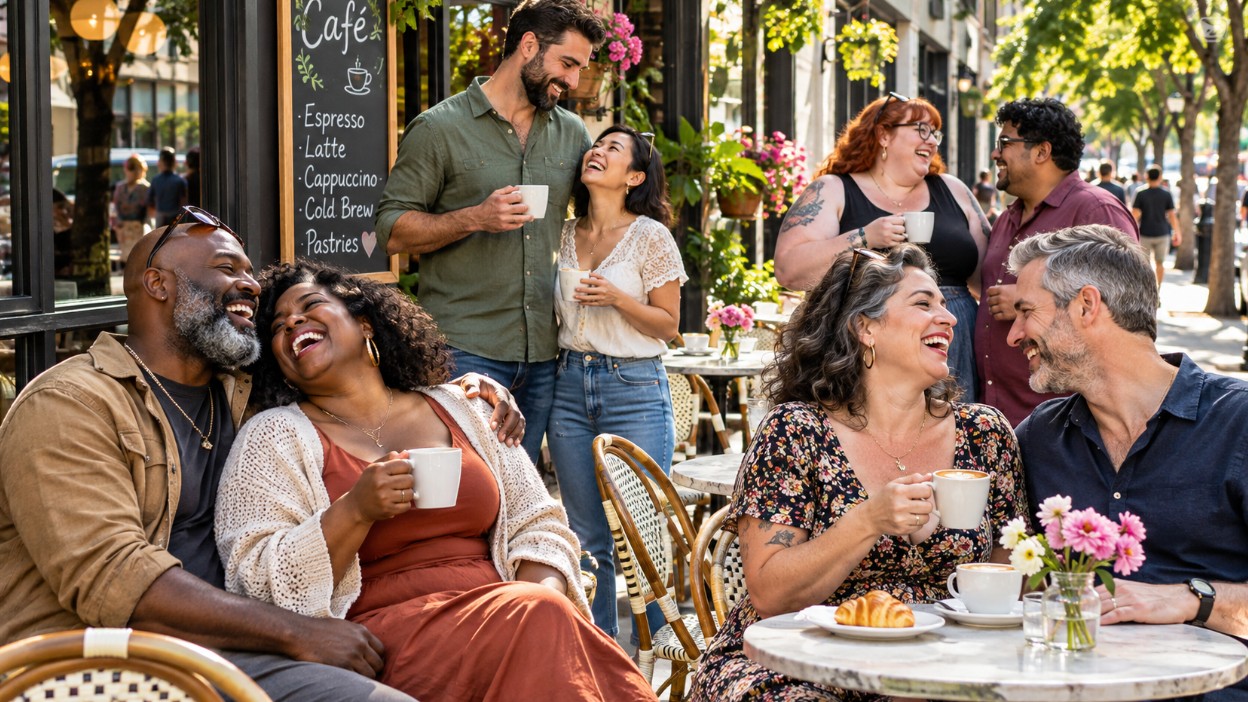
This historical pendulum reveals a liberating truth: no single body type owns a monopoly on desirability. While some men genuinely prefer slim builds, millions of others feel equally drawn to athletic, curvy, soft, or fuller physiques—and most men’s real-world partners look far more diverse than media stereotypes suggest.
What Research Says Actually Sustains Long-Term Attraction
When relationship scientists follow couples across five, ten, or twenty years of partnership, a striking pattern emerges. Initial visual preferences—whether for a slim waist, broad shoulders, bright eyes, or a specific smile—play their largest role during the first few weeks of meeting. Once emotional attachment forms, however, the brain physically rewires how it perceives a partner’s body.
Longitudinal studies consistently show that three traits steadily overtake initial physical type in predicting lasting desire and relationship happiness:
- Emotional Safety and Reciprocity: Feeling genuinely seen, respected, and desired back amplifies physical attraction far more powerfully than static body measurements ever can.
- Confidence and Ease in One’s Own Skin: Behavioral studies repeatedly demonstrate that relaxed body language, warm eye contact, and self-assurance dramatically increase perceived attractiveness across every body size.
- Adaptability Over Time: Every human body changes through stress, pregnancy, aging, illness, and seasons of life. Men whose attraction is anchored solely in rigid external validation struggle when natural changes arrive, whereas men who cultivate appreciation for their partner’s whole presence find that attraction deepens rather than fades.
A Balanced Takeaway
Having a personal visual preference—including being drawn to slim women—is a completely normal part of human variety, not something to shame or over-police. At the same time, examining why those preferences exist offers valuable clarity. Between subtle evolutionary proportions, tactile feelings of contrast, lifestyle assumptions, and the sensitive, often unspoken pull of cultural conditioning, attraction turns out to be far more layered than a split-second glance.
When people approach physical attraction with curiosity rather than rigidity—honoring genuine chemistry while questioning borrowed social pressures—dating becomes kinder, healthier, and far more authentic for everyone involved.