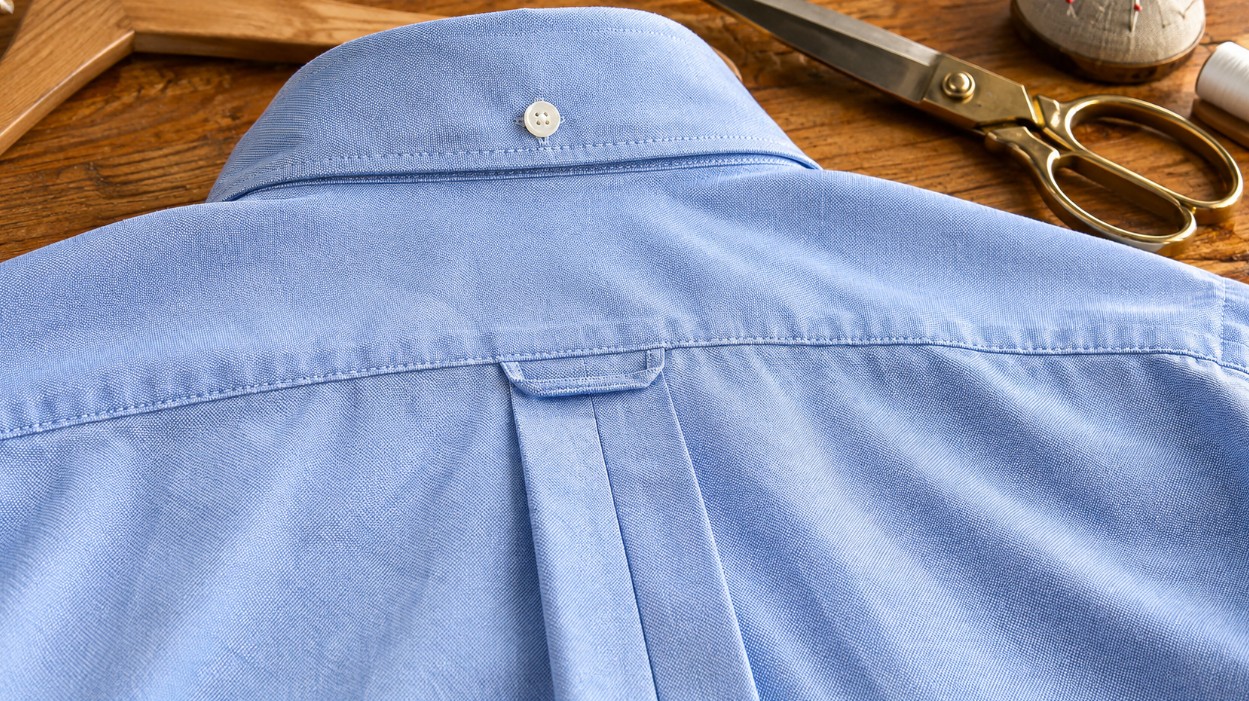
Stand behind almost anyone wearing a classic blue Oxford or casual button-down shirt, and your eyes will eventually land on a curious little detail centered right between the shoulder blades. Tucked neatly onto the horizontal yoke seam—sitting directly above the vertical fabric fold—is a narrow stitched loop barely wide enough to slip a fingertip through.
Millions of people iron around it, fold over it, and wear it for decades without ever knowing what it is called or why manufacturers still take the extra time and thread to sew it there. Most assume it is a purely decorative throwback, a quirky branding flourish, or even a vestigial stitching quirk that nobody bothered to remove.
In reality, that small strip of cloth has an official name—the locker loop—and its backstory stretches from cramped naval bunks on the open sea to 1960s Ivy League gym lockers, where it unexpectedly evolved into a secret code for campus romance.
1. Born at Sea: A Solution for Closets That Didn’t Exist
Like trench coats, peacoat buttons, and khaki chinos, the locker loop began its life as pure military practicality rather than high fashion.
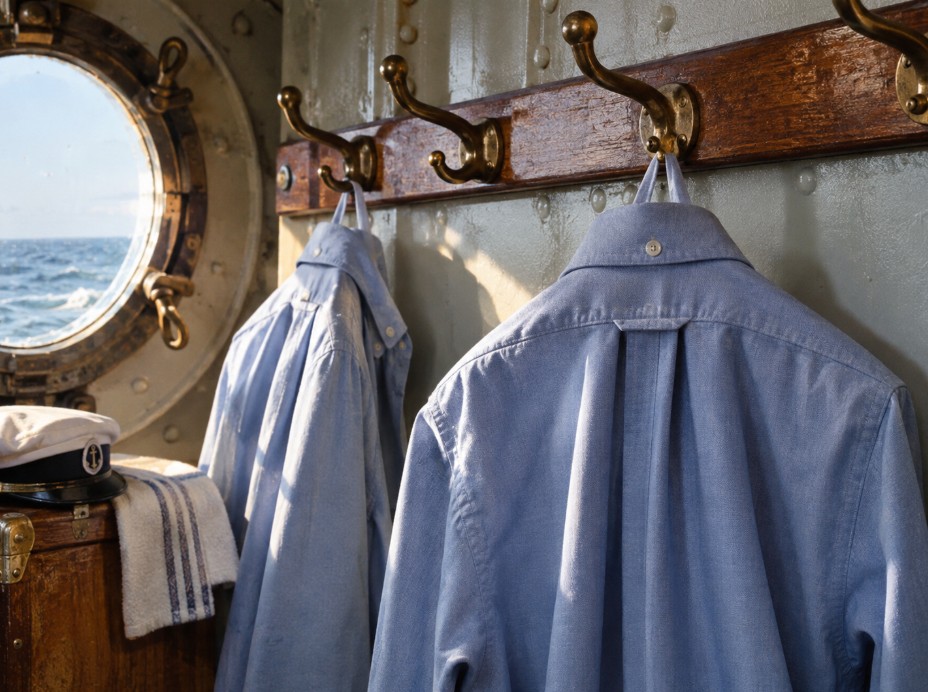
During the mid-twentieth century, East Coast sailors serving aboard U.S. Navy vessels lived in extraordinarily tight quarters. Traditional walk-in closets and rows of wide wooden coat hangers simply did not exist below deck. Instead, crew members stowed their belongings in narrow metal footlockers and small steel cubbies lined with wall hooks.
Folding a freshly pressed cotton shirt and stuffing it into a cramped seabag guaranteed deep creases by morning. Hanging a shirt directly by its collar on a sharp metal hook stretched the neckline out of shape and left permanent dimples in the fabric. The solution was remarkably simple: sewing a reinforced, horizontal strip of double-layered fabric across the upper back yoke—the sturdiest part of the shirt—so a sailor could slip the garment straight onto a brass peg or cabin hook and keep it smooth, aired out, and wrinkle-free.
2. 1960: How Yale and Gant Named the “Locker Loop”
While sailors invented the habit, the feature might have faded into maritime obscurity had it not been for a family-run shirtmaker based in New Haven, Connecticut—just blocks away from Yale University.
In 1960, Gant (which had built a devoted following among college students for its soft, roll-collared Oxford cloth button-down shirts) formally introduced the rear yoke loop into civilian menswear. At the time, Ivy League students were constantly moving between lecture halls, rowing boathouses, squash courts, and campus gymnasiums. Inside narrow metal gym lockers, hangers were scarce and space was tight.
With a reinforced loop sewn right onto the back of their shirts, students could change into athletic gear, hook their button-down straight onto a locker peg, and slip back into a presentable, unwrinkled shirt after practice. Because campus locker rooms quickly became its primary home, the feature earned its lasting name: the locker loop. Within a few short years, competing heritage shirtmakers across America and Britain adopted the signature loop, cementing it as a hallmark of classic preppy style.
3. The Hidden History: An Analog Signal of Relationship Status
Practical utility explains why the locker loop was invented—but its unexpected social life on 1960s college campuses is the chapter that catches almost everyone by surprise.
Long before social media profiles offered a dropdown menu for relationship status, college students invented their own subtle wardrobe codes. Across Yale, Harvard, Princeton, and neighboring campuses in the early-to-mid 1960s, the humble locker loop quietly transformed into an unspoken romantic signal:
- Loop Intact — Single and Available: Wearing an Oxford shirt with its rear loop untouched signaled that a young man was unattached and open to dating.
- Loop Removed — Taken (“Going Steady”): When a student entered an exclusive relationship, campus tradition held that he would carefully snip off his locker loop—or, more often, his girlfriend would playfully claim or trim the loop herself as a keepsake and a quiet warning to rivals. In exchange, many young men gave their girlfriends their fraternity pin or school scarf to wear.
The Prank That Nearly Ended the Tradition: While the romantic folklore gave the loop instant charm, it also inspired a notorious schoolyard prank. Mischievous classmates and rivals loved sneaking up behind an unsuspecting student and yanking sharply on the back loop—frequently ripping a jagged triangle right out of the back of an expensive cotton shirt. The prank became so widespread by the late 1960s that some frustrated parents snipped the loops off brand-new shirts before their sons ever left for school, and several shirtmakers temporarily dropped the feature during the 1970s before reviving it as a celebrated heritage detail.

4. The Back-of-the-Shirt Blueprint: Three Hidden Details Working Together
Once you notice the locker loop on the back of a classic button-down, look a couple of inches higher and a couple of inches lower. That tiny strip of cloth is actually the centerpiece of a three-part engineering system designed specifically for active, everyday comfort.
| Heritage Feature | Exact Location | Original Functional Purpose | Modern Value Today |
| The Back Collar Button | Centered directly on the rear base of the collar. | Anchored soft, unlined collars in place and stopped neckties from riding up over the back of the collar band. | Keeps casual collars sitting flat and neat, especially when worn under crew-neck sweaters or blazers. |
| The Locker Loop | Stitched horizontally across the center of the upper back yoke seam. | Allowed sailors and students to hang shirts on wall pegs or locker hooks without hangers. | Handy for quick travel stops, gym lockers, or steaming a shirt on a bathroom door hook. |
| The Center Box Pleat | A folded double pleat running vertically downward directly beneath the loop. | Supplied roughly 1 to 2 inches of concealed extra fabric across the upper back so the shoulders never pulled tight when reaching forward. | Delivers a tailored silhouette while preserving full arm mobility when driving, typing, or lifting. |
Notice how the three details align vertically along the spine. In traditional tailoring, the horizontal locker loop sits directly over the top edge of the box pleat, reinforcing the stress point where the folded pleat meets the yoke seam while adding subtle visual symmetry.
5. Myths vs. Practical Reality: Should You Use It—or Cut It Off?
Because the locker loop’s history faded from everyday conversation, several creative myths popped up online to explain it. Clearing those up helps you care for your shirts properly:
- Myth: It is meant for threading a tie or scarf through. Some viral posts claim the loop was designed to hold a silk cravat or necktie neatly around the neck. In reality, the loop sits far too low—well below the collar seam—to ever anchor a tie. That job belonged strictly to the tiny third button on the back of the collar itself.
- Myth: You are supposed to cut it off like suit vent tacking stitches. Unlike the temporary X-shaped basting threads sewn into the vents or pockets of a brand-new blazer, a locker loop is permanently lock-stitched into the shirt’s yoke. Attempting to cut it out carelessly with scissors or a seam ripper can easily nick the yoke seam and create a pinhole right between the shoulder blades. Unless it genuinely bothers you, leaving it intact preserves both the seam’s strength and the shirt’s authentic heritage look.
Smart Ways to Use (and Care for) the Locker Loop Today
Even in an era of spacious closets, the locker loop still earns its keep in a few practical scenarios:
- Quick Stops and Travel Layovers: When stepping into a gym changing room, a fitting room, or a hotel bathroom where hangers are missing, hanging a shirt by its locker loop for 20 to 60 minutes keeps it off damp benches and prevents collar stretching.
- Steam-Refreshing on the Road: Hanging a travel-creased button-down from a bathroom hook by the locker loop while taking a hot shower lets gravity pull wrinkles straight down along the box pleat.
- Skip It for Long-Term Closet Storage: For day-to-day storage over weeks or months, a contoured wooden or padded hanger is still the better choice. Leaving a heavier Oxford shirt suspended solely from its tiny loop for long stretches concentrates all the garment’s weight on two narrow stitch points, which can eventually cause the upper yoke to pucker.
- Ironing Without Snagging: When pressing the back of a shirt, iron up to the bottom edge of the yoke rather than gliding the tip of a hot iron straight upward into the open loop. Smooth the yoke from the collar downward so the iron plate glides effortlessly over the stitched strip without catching or tearing it.

Small Stitches, Lasting Stories
Classic clothing rarely keeps a detail around for sixty-plus years by pure accident. Just like the tiny fifth watch pocket on a pair of blue jeans or the buttoned epaulets on a trench coat, the locker loop survives because good functional design ages into timeless character.
The next time you spot that modest strip of stitched cotton centered on the back of a button-down shirt, you are looking at more than an extra scrap of fabric. You are seeing a clever piece of mid-century naval engineering, a staple of 1960s locker rooms, and a charming relic from an era when a single snip of a thread could tell an entire campus that someone had found their match.