Flip around almost any classic Oxford button-down shirt—whether it has been hanging in a closet for fifteen years or came off a department store rack last week—and you will spot a curiously small strip of folded fabric stitched right beneath the back shoulder seam. Measuring barely an inch and a half wide, this modest little tab sits quietly between the shoulder blades, rarely noticed by the person wearing it and frequently puzzled over by anyone ironing it.
For decades, millions of people have worn shirts with this exact detail without giving it a second thought, assuming it is either a quirky leftover of factory stitching or a purely decorative flourish. Yet that tiny loop carries one of the most charming backstories in modern clothing design. Born out of sheer maritime necessity, perfected inside 1960s college locker rooms, and briefly turned into a rebellious symbol of campus romance, the locker loop is a miniature time capsule stitched right into your everyday wardrobe.
From Ship Bunks to Ivy League Lockers: The Original Purpose
Long before sleek cedar hangers and walk-in closets became household standards, keeping a collared shirt crisp in tight quarters was a daily logistical headache. The story of the back shirt loop begins in two surprisingly rugged environments: mid-20th-century naval vessels and college athletic rooms.
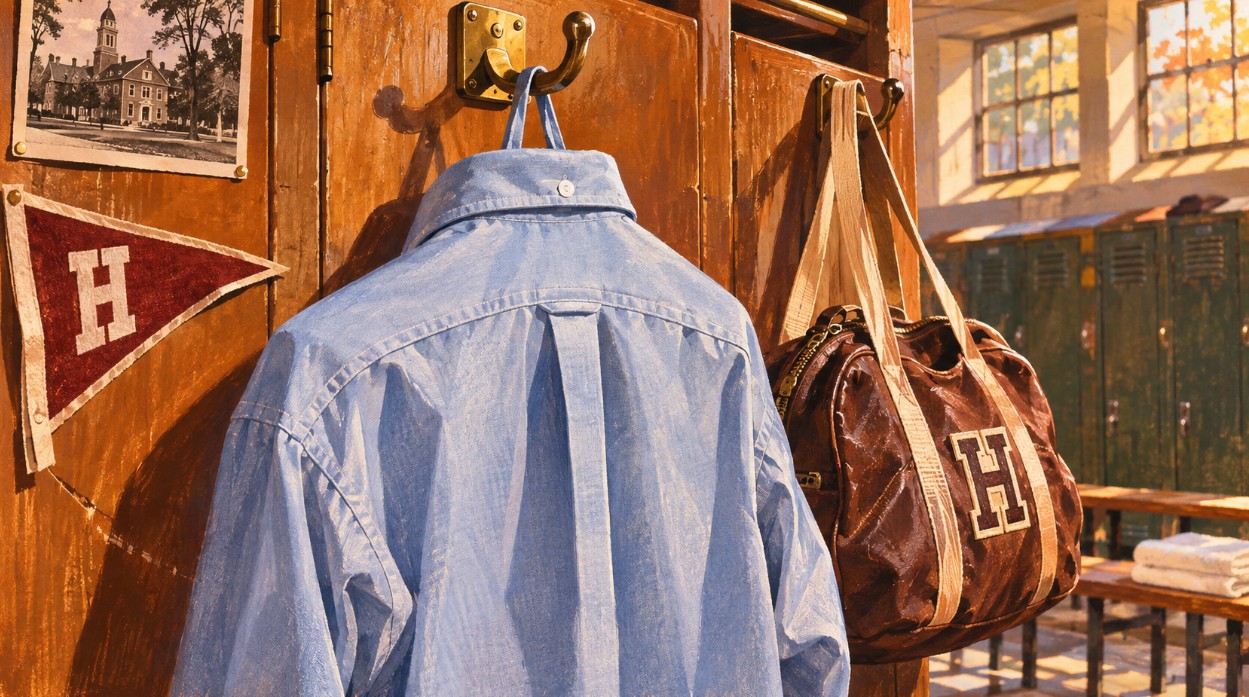
- Built for Tight Quarters at Sea: Early accounts trace the practical concept to East Coast sailors and U.S. Navy crewmen in the 1940s and 1950s. Living aboard cramped ships where closet rods and coat hangers simply did not exist, sailors relied on rows of brass hooks bolted to bulkhead walls. Hanging a shirt directly by its collar stretched the neckline out of shape and left deep, ugly creases across the shoulders. Sewing a sturdy fabric loop directly onto the back yoke allowed a shirt to hang vertically from a single hook—keeping the collar upright and the front placket relatively wrinkle-free.
- The 1960s Ivy League Boom: While sailors proved the idea worked, an American shirtmaker turned it into a permanent fixture of classic menswear. In 1960, Gant Shirtmakers—then based in New Haven, Connecticut, right next to Yale University—introduced the detail commercially on its iconic Oxford cloth button-down shirts and coined the name it still carries today: the locker loop. College athletes and students changing in narrow metal gym lockers could slip the loop straight onto a locker hook during practice or class without cramming a crisp cotton shirt into the bottom of a gym bag.
The Unusual 1960s Dating Ritual Almost Everyone Forgot
Practicality explains why shirtmakers invented the locker loop, but an unexpected wave of teenage folklore in the 1960s explains why it became legendary. Across American high schools and Ivy League campuses, that harmless little hanging tab briefly transformed into a public relationship status indicator.
Long before social media profiles displayed “In a Relationship,” campus culture invented its own visual shorthand right on the backs of students’ shirts:
- Snipping the Loop Meant “Off the Market”: When a young man started “going steady” exclusively with a girlfriend, he—or his partner—would take a pair of scissors and cleanly snip the locker loop right off the back of his favorite button-down shirts. Walking across campus with a missing loop signaled unmistakably to everyone behind him that he was taken.
- The Flirtatious Tug: If a guy left his locker loop intact, he was advertising that he was single. According to alumni accounts from the era, classmates who had a crush on a boy would sometimes sneak up behind him in the hallway and playfully yank on his loop to grab his attention.
- The Unintended Wardrobe Hazard: As charming as the tradition sounded, enthusiastic tugging had an expensive downside. Because the loop was stitched directly into the thin seam separating the upper yoke from the back pleat, a sharp pull frequently ripped a gaping triangular hole right across the back of a brand-new shirt—prompting frustrated parents and students to complain loudly, even as the trend cemented the loop’s place in American style history.
Decoding the Trio on Your Back: Clearing Up the Biggest Shirt Myths
Viral trivia posts occasionally claim that the little back loop was designed to hold a scarf in place or thread a necktie through so it would not slip out from under the collar. In reality, that confusion stems from mixing up three distinct heritage tailoring features that all meet within two inches of each other on the back of a classic Oxford shirt.
Understanding how this tailoring trio works together reveals the quiet engineering behind a well-made shirt:
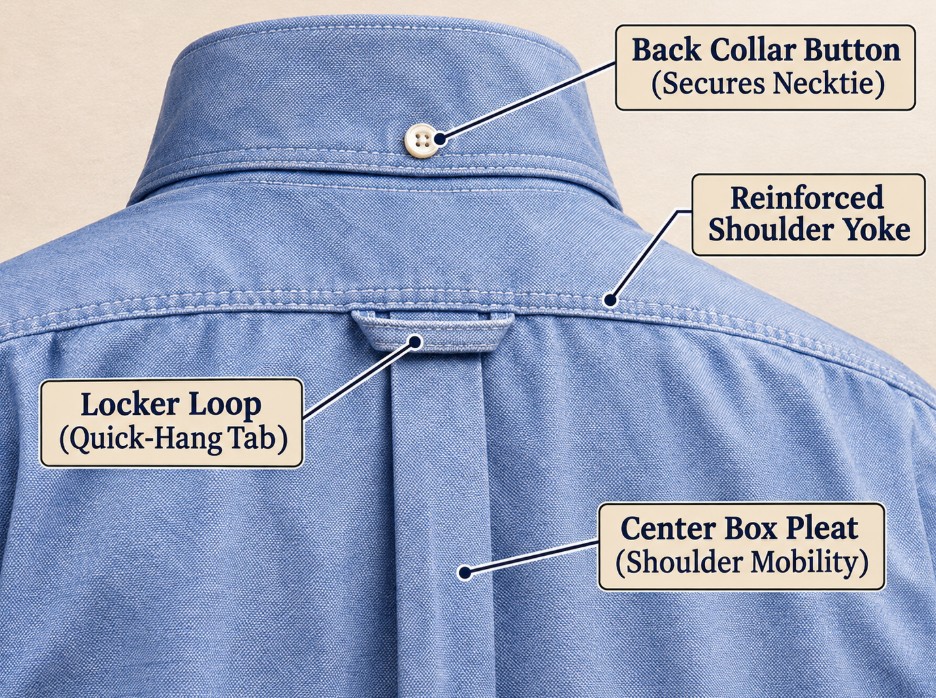
- The Back Collar Button (The Real Tie Keeper): If you look just above the locker loop—dead center on the back of the collar itself—you will often see a tiny third collar button. This is the feature invented to keep a necktie anchored neatly beneath the collar so it never rides up the back of your neck.
- The Center Box Pleat (The Mobility Engine): Directly underneath the locker loop sits a neat vertical fold of extra fabric called a box pleat. Rather than being decorative, that extra inch of folded cloth expands whenever you reach forward, drive a car, or swing your arms, preventing the shirt from pulling tightly across your chest and shoulders.
- The Locker Loop (The Anchor & Hook): Positioned squarely at the junction where the sturdy double-layered shoulder yoke meets the top of the box pleat, the locker loop takes advantage of the strongest reinforced seam on the garment—distributing the shirt’s weight evenly when draped over a peg or hook.
Should You Actually Use the Locker Loop Today?
Once people discover that the little tab on the back of their shirts was engineered for hanging, their immediate instinct is to start hanging every button-down from hooks inside the closet or bathroom. Before you retire your coat hangers, however, textile care experts offer a more nuanced verdict.
Modern shirts are often woven from lighter-weight cottons and stretch blends than the heavy, armor-like Oxford cloth of 1960. How well the locker loop performs depends entirely on how long and how wet the shirt hangs:
| Everyday Scenario | Should You Use the Locker Loop? | Why It Works (or Doesn’t) |
| Quick Pit Stops (gym locker, hotel bathroom, fitting room for 15 to 45 minutes) | Yes — Ideal Use | Keeps a dry shirt off benches and floors without crushing the collar or front placket. |
| Overnight or Multi-Day Closet Storage | No — Use a Hanger | Gravity pulls down on a single small point over days, gradually stretching the back seam and creating a noticeable dimple between the shoulder blades. |
| Air-Drying a Freshly Washed, Wet Shirt | Never | Wet cotton is dramatically heavier than dry cotton; hanging a soaked shirt from a tiny loop puts severe strain on the yoke stitches and distorts the box pleat. |
| Travel & Steaming in a Hotel Room | Short-Term Only | Helpful for hanging a shirt briefly on a bathroom hook while shower steam relaxes light suitcase creases—then transfer promptly to a wide hanger. |
A Quick Ironing Tip: If you iron your own shirts, always press the yoke flat around the locker loop first, then sweep the tip of the iron lightly across the loop itself—never push the pointed nose straight underneath the tab, which can snag the seam and fray the stitching over time.

Why “Vestigial Design” Still Matters in Everyday Clothing
The locker loop belongs to a beloved family of garment details that fashion historians call vestigial design—features that outlived their original daily necessity and survived purely because they signal craftsmanship and authenticity. You wear similar pieces of living history every day without realizing it:
- The tiny fifth pocket inside your right front jeans pocket, originally stitched by Levi Strauss in the 1870s to protect gold miners’ pocket watches.
- The row of buttons on a suit jacket cuff, designed centuries ago so surgeons and military officers could roll back their sleeves cleanly without removing their coats.
- The little triangular stitched patch beneath the front neckline of classic athletic sweatshirts, originally crafted from absorbent ribbed cotton to catch sweat and stop the collar from stretching out.
Even in an era of walk-in closets and ergonomic wooden hangers, heritage brands keep stitching that modest fabric tab onto the back of button-down shirts for a simple reason: it honors the practical ingenuity of the sailors who needed a smarter way to hang their gear, the 1960s shirtmakers who solved a locker-room annoyance, and the generation of students who briefly turned a tiny piece of folded cotton into a secret language of young love. The next time you pull on a crisp button-down—or need a quick spot to hang it on a hook while changing—you will know the full story sitting right behind your shoulders.